Friday, May 30, 2008

Chasing Miss Scarlett...

It is by now no secret to anyone, lest of all you, dear reader, that race is always directly in the center of all my analysis, all twisted up and intersecting with sexuality, class, gender, and nation as I struggle to make sense of the world. There was a time in my life, specifically when I became truly politicized, that it seemed incomprehensible to me that other people could go through life not being obsessed about these things. As I grew, however, and began to think more deeply about these things I recognized that ultimately we are all different people with different paths on this planet -- mine is paved in critical social theory and justice work.

However, I never ceased to be amazed by how ignorant people can be about the reality of social inequality and the ongo
ing effects of white supremacy in the 21st century.

And by "people" I mean white folks.

I recently had to travel to Houston, TX for the final fitting of my wedding gown. My mother had agreed to come with me to learn how to fasten the dress and arrange the bustle for me (it sounds simple enough but trust me it takes an army of two to get this thing on and looking right). We, of course, were not the only customers being served. As we awaited instructions from the seamstress I observed a young Latina preparing for her
quinceñera and a young white woman in an enormous white dress surrounded by three of her friends and her mother. We were all talking excitedly as the seamstress began to give my mom and the young white woman's mother instructions on how to fasten the backs of our dresses. Although our dresses were quite different, they both had corset backs that had to be tied in a particular way in order to look right and to secure the enclosures. And so the lesson began.

It was all very fun and innocent until one of the young woman's friends made one of the most off-the-wall statements I'd heard in a while. As she tied her friend's corset and watched the
silhouette of the dress take shape she stated, "Oh my God! You look just like Scarlett O'Hara!"

Scarlett?

O'Hara?

As in Gone With the Wind (1939) Scarlett O'Hara? As in "I don't know
nuthin' 'bout birthin' no babies Miz Scarlett!" As in "With God as my witness I will never go hungry again!" The problems with this great heroine of the South are too numerous to lay out but I'll try. The character of Scarlett O'Hara reveals the extent to which race and gender interacted and created the social, cultural, and political landscape of the antebellum U.S. South. She is the quintessential southern belle, pampered and spoiled, a beautiful young woman who uses her charm and beauty to entrap young men and get what she wants out of life. In this sense some have looked to her as a pre-feminist model who recognizes the gendered power dynamics of her environment and attempts to flip the script on stupid men to have her own way. On the other hand, she also fully relies on men to protect her, provide for her and take care of her throughout the film. From her father to Rhett Butler to the enslaved Black men who serve her family (before and after Emancipation), men are central to her life and survival.

Second, the figure of Scarlett O'Hara as the essential Southern belle is rooted in a history of plantation violence that is erased in the romantic and nostalgic representations of the antebellum South. Some (white) women might like to look to Scarlett as a feminist
foremother because of her fortitude and strength in the face of adversity, the fall of the South, and the Yankee invasion, but there are some of us who are the daughters of the women who nursed her, raised her, served her. And although Scarlett might not have known it, we are the daughters of those dark women who were sexually abused and raped by the white men that she looked to for protection. Those same white men who felt her white beauty and pure femininity were so valuable that she must be protected from Black men, our fathers, who posed a threat to her virtue. We are the daughters of Black men, swinging from Southern trees, that strange fruit Billie Holiday sang about, sacrificed on the altar of the Great Southern Dream. We remember the plantation, too, and our memories are quite different. In order to embrace Scarlett O'Hara, we must forget all that we know about the antebellum and postbellum South. White people may have the luxury of amnesia but for Black folks and other people of color that sort of memory loss is suicide.

Is this what young white women in the 21st century aspire to become? Do they still want to be Miss Scarlett? What does it mean that the ultimate standard of white beauty and femininity continues to be that of the Southern belle, living in the lap of plantation luxury, oblivious to the violence that makes her pampered existence possible while simultaneously entrapping her in a world of white patriarchal control? It seems to me that white women if they are to become truly a part of the struggle for justice (be it gender, racial, economic, or environmental justice) must begin to find and embrace new models.

A short detour, however, back to our original story. When I heard the young woman's friend tell her that she looked like Scarlett O'Hara, I nearly stopped breathing. In my mind, if this conversation followed its logical conclusion there was only one place it could go. And it did.

Laughing, another friend responded "Yeah, but she had servants," followed by more laughter. Finally, the mother states, "Yeah, except they were slaves, but, well, you know..." she began to trail off uncomfortably, as the three friend twittered and giggled nervously. Perhaps they looked over to the right and noticed the two dark-skinned Black women, my mother and myself, standing there, the descendants of enslaved Africans and suddenly became aware of their own whiteness. That's my optimistic reading, it's more likely that they saw our black bodies and just didn't want to make a scene. The paradox of the post-Civil Rights Era, since outright bigotry is beyond the pale now, white folks don't stop being racist, they just become more polite about it. Another fine example of good ol' fashioned Southern Hospitality.

This incident reminded me how exhausting patriarchy and white supremacy are for me. I don't wake up in the morning looking for this stuff, mostly I'd just like to live and enjoy my life like every other human being on this planet wants to. As I stood there in my wedding gown, I should have been thinking about how excited I was to be jumping the broom with my partner, a radical man that I adore. Instead I was churning critical analysis as the seamstress showed my mom how to handle the bustle. Feeling like Black folks and women of color are the only people who ever have to work about race or gender is exhausting. The burden of memory is heavy and if we are ever to set this world right, it is time for others to take up their own cross and understand the memory of racial terror, sexual violence, slavery, and white supremacy that provides the foundation for the cultural fantasies that they hold dear. For white folks who don't understand why Black people are still so pissed about race or Black women can never seem to shake the effects of patriarchal white supremacy, ask Scarlett. I suspect she knows quite a bit more about it than she ever really let on.

Postscript: And since my wedding dress was the source for this blog, I have to wonder why is it that so many tired and messed up cultural scripts get reproduced in the wedding/bridal industry. If I had a nickel for every time someone told me that I would look and feel like a queen or princess on my wedding day, I'd be suffocated by all the newly acquired cash. Why do these wedding businesses capitalize on the most racist and patriarchal fantasies -- I can assure every little girl does not want to be a princess, a Southern belle or anything else on their wedding day. I had not spent my whole life dreaming about getting married or getting to dress up like a princess...but that reflection is for another blog...maybe.

Saturday, August 11, 2007

On Love & Terror in Scotland

I.

My father has always traveled for a living. It is a small irony that my work now requires me to do the same. It is the only family tradition that we have – taking occupations that require us to be away from those we love more often and for longer than we’d like – and we are three generations deep into it. It was, I suppose, the arrogance of my own youth that made me believe that becoming an anthropologist was so different or worse, an improvement, from my father’s work as an aviation mechanic or my grandfather’s truck driving. Traveling these days, however, is precarious whether one does it for business or leisure.

When my father had to go out of town it was a huge affair for our family. My mother cooked everything he liked in the days leading to his departure, my brother and I attempted to behave like model children, and on d-day we, of course, accompanied him to the airport. It was the early 90s, very few people outside of Texas knew or cared about a young man named George W. Bush, the Department of Homeland Security did not exist and as long as you passed a security clearance (which did not consider water or contact solution as weapons of terrorism) you could accompany a traveler to his or her departure gate. And we did, more times than I can remember. We stood silent, plastered to the floor to ceiling windows, tears rolling down our faces. He was gone again; doing what he knew best which required him to leave again to provide for us from somewhere else.

Years from now, I know my children will not believe me when I tell them this story. Being able to accompany or even meet a loved one at the gate. There was a time when Al-Qaeda, security, or the realities of global terrorism had no real meaning for most Americans. Those days of insulation, naivete, “it couldn’t happen here,” are gone, irrevocably behind us. As I drink and celebrate with friends in Fortingall, Scotland, a tiny village hidden in the Scottish countryside, I know this to be true.

II.

Two men attempt to attack the Glasgow International Airport by driving a jeep into the departures terminal before setting it and the driver on fire. No one is injured, the perpetrators are caught, and the United Kingdom breathes a sigh of relief. In the past 36 hours security officials have foiled three attempted terrorist attacks. Scotland gets a visit because the new prime minister, Gordon Brown, is Scottish.

There is a moment of silence. When the country slows down bracing itself for more violence, when spaces for contemplation open and people wonder if there are better solutions to ending terrorism. But before we can collectively engage these questions, the spin doctors take over:

“BUNGLED TERROR OF AMATEURS”

“DOCTORS OF DEATH”

“CAR BOMBERS ARE BRITISH DOCTORS”

“TERROR COPS SEIZE DOCTOR AND WIFE!”

“BOMBS: TWO DOCTORS HELD”

The space closes, and we are back to business as usual. The papers report at least 15 racially motivated crimes against Scottish Muslims in the week following the attacks. Brits respond with equal violence, dropping the mask of liberal multicultural tolerance:

Should have let the miserable radical bastard burn a bit longer, then pour salt in his burning flesh! I am fed up with Muslims excusing themselves as peaceful when they are obviously not! Islam is a dangerous religion and should be banned from all Western nations, in and out of EU period!

I had an appointment with my G.P. today to lance a boil on my backside. I think I will phone Dr.Hassan and cancel until I have converted to Islam. Be Safe ….Be Scared…..Be Muslim….or else. Sleep Tight

I breathe heavy, turn the page, search the paper for subjects and people (Islamic fundamentalist terrorists and psuedoliberal white Europeans) who do not frighten me.

III.

The world has changed for me. It is an ugly place where I do not feel safe. As a Black woman of deep political conviction, I am opposed to the policies and actions of my government. And, yes, it is mine even when it ignores me, disrespects me, and enacts terror and domination around the globe in my name and without my consent. I struggle for justice and peace recognizing the grievances and wrongs done to peoples in the Middle East while rejecting the senseless bloodlust of sectarian, fundamentalist terrorist organizations. And I know we have our own fundamentalists to battle at home.

But when I grab my passport, check my bags, pass through security checkpoints, and board an airplane, I take my life into my own hands. I am not protected. Not my politics, not my blackness, my identity as the daughter of an immigrant and the children of enslaved Africans, my genuine desire for peace, or my conviction that the U.S. needs to get the fuck out of the Middle East and spend our money on research into biofuels and gasoline alternatives. None of this protects me. I am coming to terms with my own small human vulnerability. This body will not live forever, and forces outside of myself can take it from me before I am ready to let it go.

When they tell us what has happened in Glasgow, my thoughts fly home. In this moment I want to bury my face in my father’s shoulders; wrap my arms around my mother’s waist and curl myself around her like I did as a child; place my hands, palms flat on my beloved’s face and create our own sanctuary where I can pledge my life and love to him for as long as we both live on this Earth. In that moment, thousands of miles from those who matter most to me, the only thing that can quell my fear is love.

I used to believe that suicide bombers were freedom fighters protesting the injustices done them by placing their lives and bodies on the line. 20th century versions of Nat Turner or Touissant L'Overture -- individuals driven to revolutionary violence by oppressive, genocidal colonial states. I thought, given similar circumstances someone like me, could someday feel compelled to do the same thing.

I no longer believe that.

I now know that life is too precious for man to carelessly give or take away.

IV.

We are all standing on shifting sand; the world is changing and I have no idea where it is going or what the future might bring.

I hope for clarity, compassion, and forgiveness.

I pray for peace and reconciliation.

But, like a proper realist, I steel myself for the worst.

Passengers can no longer be dropped off at the departure terminal at the Glasgow International Airport. The news shows long lines of people hauling their luggage for miles towards the airport, like first world refugees.

Our children will never know what it was to live the way we did, a semblance of freedom that came in the form of ignorance of fear. Naïve of the terror that has afflicted the rest of the world for the last sixty years. It is almost impossible for those of us who lived it to recall those days and believe it.

I have to get home to my family and I must get on a plane to do it and trust that today is not my day, right now is not my time. I can outrun the fear and the violence just one more time and let love help me to find my way home.

Thursday, August 09, 2007

DL Hughley ATTACKS Rutgers Women

Not sure what to say. Comedian DL Hughley goes on national television and affirms that Don Imus did in fact, get it mostly right. According to him, the Rutgers University women's basketball team are indeed a bunch of nappy-headed women and ugly to boot. The sheer intensity of his internalized racism and overt sexism is just too much. Regardless of whether some people think he's just being funny or not, the fact is that the women of the Rutger's University women's basketball team have done nothing, nothing, NOTHING to deserve this level of disrespect. We should all take it upon ourselves to take a stand and say "Enough." Because this stuff is truly degrading and unacceptable.

Wednesday, March 21, 2007

Caribbean Coast Reflections

I remember going to an underground hip hop show in San Antonio some years ago. I stood mashed in a crowd of other sweaty, colored bodies, nodding my head as a young Latino MC ripped it onstage. And I remember standing mesmerized, as he repeated over and over again, "The world is a sad and beautiful place. The world is a sad and beautiful place..."
The truth of his words have stayed with me over the years as my travels have led me to different parts of the world. To a holiday house in Scotland and dancing traditional Irish dances with new friends to hauling a gringo pack under the burning heat of a Honduran sun to slipping 10 dollars to a homeless man in front of Vulcan Video in Austin. In Bluefields, Nicaragua I wonder what to think when I am walking back to my hotel room and see a Black man, half-kneeling on the ground, half-slumped against a building, passed out and oblivious to the world around. Leave some change under his hand, and slip into my hotel. I don't want to embarass him.
I've spent the last week here on the Caribbean Coast of Nicaragua. It is the first time I have spent a substantial amount of time outside of Bluefields. I traveled to the Pearl Lagoon Basin, located north of Bluefields.
The beauty of this place is sometimes overwhelming. Like standing on a bar made of large boulders that separates the Bluefields Bay from the Caribbean Sea/Atlantic Ocean. You feel the smallness and the wonder of your own existence. I stood there, wrapped in a bright pink sarong, savoring the heat of the sun on my shoulders, wondering how many others had experienced this, felt this before me. What a miracle to live here and be this close to the water everyday. And then I thought of my own life, back home, how rarely I make it a point to get close to the water in Austin, how beautiful the state parks, rivers, lakes, and forests are. The privilege I rarely exercise, of being able to drive to these places whenever I wish.
It is a miracle to live in this place, but also a struggle. There are too few who are able to enjoy the beauty of the Caribbean Coast. Too many people struggling to survive, making money stretch, exchanging their dreams for rum and crack cocaine.
The world is a sad and beautiful place.
Random ruminations ya'll...trying to make sense of how life can simultaneously be horrible and beautiful.

Tuesday, March 06, 2007

Iranian Activists Arrested Ahead of International Women’s Day

More than 30 Iranian women have been arrested in Tehran for
protesting against government pressure being put on women's rights
activists.

The women had gathered outside a court in Tehran on March 4 to show
their support for four women's rights activists who went on trial
that day for organizing a protest last summer against discriminatory
laws. Reports say many of the protesters and the activists are now in
jail.

The arrests are the culmination of a year of increasing pressure on
women's rights activists, who have been arrested, summoned to court,
threatened, and harassed. Their protests have also been disrupted --
in some cases violently -- and their websites have been blocked.

Trying To Silence Activists

Some observers believe the arrests are aimed at intimidating
activists who were planning to hold a gathering on March 8 to mark
International Women's Day and to protest injustice against women.

The move is also seen as an attempt to silence activists who have
been fighting for equal rights.

Many of those who had called for holding a protest in front of the
parliament on March 8 are now in jail.

Iranian rights groups report that between 30 and 34 women who were
arrested are being held in Tehran's Evin Prison. Among them are four
top women's movement leaders: Noushin Ahmadi Khorasani, Parvin
Ardalan, Sussan Tahmassebi, and Shahla Entesari.

Right To Freely Assemble

They went on trial on March 4 in connection with a June gathering
against laws that they consider discriminatory against women. Charges
against them include acting against Iran's national interests and
participating in an illegal gathering.

The four leaders were arrested after they left the court and joined
other women who had gathered outside Tehran's revolutionary court.
They were reportedly holding banners that said: "Holding peaceful
gatherings is our absolute right."

Activists say the Iranian Constitution ensures the right to holding a
peaceful gathering. Yet police forces disrupted the activists on
March 4 and drove the women away in minibuses.

Peyman Aref, a student activist in Tehran, told Radio Farda that
police used force against demonstrators.

"They were threatened and they were also beaten up," Aref said. "The
crowd -- [which] included more than 50 people -- tried to resist by
sitting on the ground and not reacting to the beatings. Finally,
around 10:00, female police came and the activists were arrested."

Reaction To Activists' Campaigns?

During the June demonstration, which was also violently dispersed by
police, some 70 people were arrested. All of them have since been
released.

An Iranian rights group, the Student Committee of the Human Rights
Reporters, said today that the families of some of those arrested on
March 4 gathered in front of Evin Prison and called for their
release. Authorities have said they are investigating the case.

Azadeh Kian, a lecturer in political science and an Iran researcher
at France's National Center for Scientific Research (CNRS), believes
women's rights advocates are being targeted in connection with two
campaigns they have launched in recent months.

One campaign aims to end the practice of stoning to death convicted
adulterers. Authorities, however, deny that stoning sentences are
being carried out.

Another campaign aims to gather the signatures of one million
Iranians who are in favor of changing discriminatory laws and to
present these signatures to the parliament. Islamic laws as applied
in Iran deny women equal rights in divorce, child custody,
inheritance, and other areas.

Kian tells RFE/RL that the campaigns have been well received, leading
to concern among Iranian leaders.

'Intolerance For Human Rights'

"The goal of women's rights activists is to gain the support of women
from different classes who are in favor of changing the laws but have
so far not joined the women's movement," Kian said. "This leads to
concern among some of those in power in Iran about the implications
of these actions. I see the arrests of activists [on March 4] in this
relation; it shows that more and more women want changes in laws and
also that women's issues are in fact becoming more and more political."

Human rights groups have expressed concern over the pressure and
persecution of women's rights advocates, including those who are
calling for reform legislation.

Kian says that by arresting peaceful activists, Iranian leaders are
demonstrating their intolerance and lack of respect for human rights.

"It shows once more that under the Islamic establishment, especially
under the current government, there is no respect for human rights
principles," Kian said. "These women were arrested even though they
had not committed any violent or armed action against the
establishment. None of the demands of these women are against Islam.
This shows that the current government is not ready to accept even
the slightest opposition."

The Center of Human Rights Defenders, cofounded by Nobel Peace Prize
laureate Shirin Ebadi, today described the March 4 arrests as
"illegal" and called on authorities to release all of those arrested.

Copyright (c) 2006. RFE/RL, Inc. Reprinted with the permission of
Radio Free Europe/Radio Liberty, 1201 Connecticut Ave., N.W.
Washington DC 20036. www.rferl.org

Wednesday, February 28, 2007

Freedom University Book Club in March!


This month we will be reading Erzulie's Skirt by Ana-Maurine Lara.
The book was published by Red Bone Press, an independent press dedicated to publishing the work of queer Black writers. Set in the age of urbanization in the Dominican Republic over the course of several lifetimes, Erzulie’s Skirt is a tale of how women and their families struggle with love, tragedy and destiny. Told from the perspectives of three women, Erzulie’s Skirt takes us from rural villages and sugar cane plantations to the poor neighborhoods of Santo Domingo, and through the journey by yola across the sea between the Dominican Republic and Puerto Rico. It is a compelling love story that unearths our deep ancestral connections to land, ritual and memory.
Erzulie's Skirt has recently been nominated for two Lambda Literary awards for in the categories of Best Lesbian Fiction and Lesbian Debut Fiction. A local artist doing amazing things and producing beautiful art. Ana is a wonderful writer and dear friend and we are blessed to have her right here in Austin.
So do these four things:
1) Buy Ana's book. It can be found at Book Woman, Resistencia Books, or online.
2)Read the book.
3) Come to the Freedom University Book Club at the Carver Library on Thursday, Mar. 8 at 6pm. We meet every 2nd Thursday of each month. The Carver is located at 1161 Angelina Street.
4)Buy Assata: An Autobiography cos' that's what we're reading next month and I think you'll dig it. You can probably find a nice copy at any Half-Priced Books, Resistencia, Book Woman or Book People.
Peace to all...

Wednesday, February 21, 2007

Sun is Shining...


Hello WanderLust lovelies...
The Capitol City was lovely today. Nothing but pure sunshine and life-giving warmth. I wore a skirt for the first time in months and I'm feeling incredibly refreshed by the weather.
This may not mean much to many of ya'll but since the middle of November we have been experiencing some uncharacteristically cold weather here in Austin. Hippies all over town have been forced to put on socks and closed-toed shoes. Fraternity girls and pint-sized hoochies from West Campus to Rosewood have been compelled to put on pants and leggings instead of their preferred uniforms of mini-pleated skirts and pierced-navel baring baby-tees.
It has been a truly dark time.

In other developments I have learned that ugly weather and weeks of solar deprivation make me and my partner real bitchy. If the sun hadn't come back last week, I might have killed him, but then I would have felt bad.

Even still, it was hard to feel motivated to get up, get dressed and go to work when the weather was so forbidding. It is in moments like this that I realize, no matter how divorced many of us may be from the earth, she has a way of making you pay attention. We are people of this planet, and we need to feel its beauty in our lives, or else we become distant, disgruntled and unhappy.

As a proper graduate student I went to class when what I really wanted to do was mosey on over to Barton Springs and kick back. But I took every chance I could to get outside and enjoy the sunshine...they say the weather is going to hold up. Let's all take some time to spend our lives in the sunshine.

Sun is shining...the weather is sweet, yeah...make me wanna move....my dancing feet....


Take care family... c

Monday, February 19, 2007

On Becoming a Pundit


Ladies and Gentlemen, I have officially become a pundit. According to Merriam-Webster Dictionary, a pundit is described as "1) a learned person; 2) a teacher; 3) or an authority, critic." As many of you know, I have been giving out my opinion for years without recognition or compensation. In fact, I think more people would have paid me to shut the hell up. Still, for better or worse, I am a talker and have no problem telling people what I think about the world in general.
As it turns out, other people have decided that this is a good thing.
I recently participated in a panel of activists, cultural producers, and scholars discussing the impact of sexism in hip hop for Houston PBS. Specifically, we were discussing Hip Hop: Beyond Beats and Rhymes, a documentary by filmmaker Byron Hurt that engages issues of machismo, masculinity, gender, misogyny and homphobia in hip hop. Hands down this was one of the best documentaries I have seen in a very long time. The film follows Hurt, a former college quarterback who became a gender violence prevention educator. After beginning this work as an educator, Hurt began to critically evaluate his own relationship to hip-hop and the music and images that reinforce ideals of heteropatriachal masculinity and straight up hatred of women. Far beyond offering his own commentary, Hurt goes to the very heart of the matter interviewing everyone from cultural critics to record executives about their thoughts on sexism in hip-hop.
My partner and I went to watch an early screening of the film in Austin, TX in January. It was truly a community event with youth and elders, a multiracial, multigenerational audience, and artists, activists and intellectuals in attendance. It was remarkable to see how people in the crowd responded to the things that artists and industry people such as Busta Rhymes, Clipse, Jadakiss, Russell Simmons, and others had to say on issues ranging from homophobia in hip hop to the implications of Nelly sliding a credit card down a black woman's ass in his music video "Tipdrill." I, along with many audience members, was apalled when Hurt asked Simmons what he thought of the video, and Simmons responded that "I heard about that. I tried his Pimp Juice, I thought it was very good."
We're talking about sexist, misogynist representations of women in hip hop and all you can say is that the Pimp Juice was good?
Pathetic.
So back to the original point about how I became a pundit. In February I was asked to give a presentation on women in hip hop for a friend/mentor's class that she is teaching at UT-Austin. I was honored to be asked and set out to make the best presentation that I could put together. Shortly after that, I received an email from a friend of mine in Houston who works with the Houston Hip Hop Group (Check out his work at HipHopPolitics.org). He asked me if I would be interested in coming to Houston to share my thoughts on the film and talk about the work that I do with Cimarron: Youth Building Community, a community organization that I co-founded here in Austin. After a few weeks of phone tage, emailing, and phone interviews, I was officially invited to participate. So I dragged my squeeze into driving me to Houston and we headed to the PBS studios for the taping.
I had a great time doing it. Following the taping we kicked it around Houston and had a lovely time hanging out with my friend Akil and talking politics over coffee. On the ride back home I received a phone call from a friend KC who works for the ACLU's Hip Hop Against Police Brutality project. He invited me to participate in a discussion on gender and hip hop on his radio show Concrete Skoolyard which airs on KOOP radio. I had a fantastic time doing it and was pleased to be invited.
It's a little strange to reach a point in your life where all of sudden things you say are being taken very seriously. On one hand it's a vindication of sorts, and on another, you begin to realize and understand that your life will never quite be the same -- you've made the leap from people who talk about ideas to those people whose ideas carry weight.

Now, I realize that in the grand scheme of things, what I say still may not carry as much weight in the real world as say Nancy Pelosi or Gore Vidal (a true man of letters, to be sure). However, things are a little different when people look to you to be an authority, a teacher, or a learned person who can speak knowledgably on a particular set of issues. It's gratifying and terrifying at the same time to be that person.
The other strange thing that I have been thinking about is what I like to call the "punditry ghetto," that is, the place that is reserved for pundits who are only qualified to talk about certain things. I am concerned that should I continue to do this work, I will become billed as the hip hop, gender girl, not that I mind, but the world generally tends to think that Black intellectuals can only ever speak authoritatively on race, or maybe gender if you're a woman or queer, but not on anything else.
For example, I wonder when I'll get that phone call to participate in a panel on the contradictions of Iran's nuclear enrichment programs as it relates to criticizing U.S. foreign policies of imperialism and military aggression.
You wouldn't think it to look at me, but I have lots to say about the Middle East.
Or what my thoughts are on existentialism, the work of the late Octavia Butler, Dorothy Parker's poetry, or the politics of interracial dating and revolutionary love.
I'd like to think that I am a multi-dimensional person and I don't have any desire to live (intellectually speaking) in a ghetto of any kind. I love to talk race and gender, but I see those issues as informing the larger world in which we live in significant and important ways. Maybe the gods that choose emerging pundits will figure that out.


p.s.
In any case be sure to check out Beyond Beats and Rhymes which will be airing Tuesday, Feb. 20 on PBS. You can check your local listings for specifics. And if you want to check me out on PBS blowing up a spot visit www.houstonpbs.org/hiphop/index.htm to see me talking trash about Nelly and misogyny in mainstream hip hop.

Tuesday, January 16, 2007

Routes & Exile

By the rivers of Babylon

Where we sat down

And there we wept

When we remember Zion

For the wicked carry us away to captivity

Require from us a song

But how can we sing King Alpha’s song in a strange land

My life is now a series of comings and goings, packing and unpacking my world, transporting myself to strange places and calling them home.

All my life I have been fascinated with the idea of exile. Perhaps because my family moved around so much when I was a kid. Or perhaps I knew early on that my family’s roots were fragile. Both of my grandfathers were men whose work compelled them to travel. One, my maternal grandfather, Rev. Gene Freeman (known from here on as Pappau), worked as truck driver for over 30 years, crossing the continental U.S. more times than he can remember. Before my paternal grandfather, Rennick Carlton Morris, Sr., decided to transplant his family to the U.S. permanently he moved back and forth between Jamaica and the States on a regular basis.

This is my legacy.

We have never fled our homes for fear of political upheaval. No major revolutions have displaced us.

And yet we are in exile.

----------------------------

Sulphur, Louisiana.

The last time I was in this town, devastated by an economy gasping its last breaths and the cancer-causing toxins that have consumed many of its resident, the last time I was here, I felt my heart break.

Weeds covered the foundation of what was my grandparents’ home. An unexplained fire, a victimless-crime robbed me of one of the few places on earth that I truly believed might last forever.

I sit in the car and let the tears stream down my face until my chest is so tight I can barely breathe.

We can never go back.

This house, its memories, its secrets, are lost to me.

Listened to grown-up conversations that I was too young to enter – fast, smart-mouth little girls need to stay out of grown-folks business.

Watched time, neglect, and sweltering Louisiana summers decay my grandparents’ home.

Watched teenaged cousins get pregnant, one after the other – 1, 2, 3, 4, 5…grandchildren bearing great-grandchildren.

Everything changes without my consent and in the midst of weeds and what appears to be the last vestiges of the porch where I danced for my grandfather, I know that we can never go back.

We are exiles in the land where our roots go deepest.

But the soil does not support our survival.

Mammau and Pappau live in Beaumont now.

---------------------

They do not speak of the stories that they know.

They do not speak of the secrets they carry beneath their tongues

Or the shame that burns hot in their chests, smoldering coals that remind them of where they come from

As a child I hid in the citrus trees of my grandmother’s front yard. We were uprooted island people, replicating the old ways we knew in a place at once distant and familiar. South Bay, Florida was the closest we could come to home. And we convinced ourselves that we had forgotten what home was like so we could continue to do without it. My grandparents would travel to Jamaica each year. When Pop crossed over to the other side in 1987, Kat stopped going. She will not tell us anything about Jamaica anymore. She brings us there only with the smell of beef patties, pudding, mint tea heavy with condensed milk, and curry.

She has a stroke. Body betrays her. Tongue refuses to respond. Her confident voice is replaced with a defiant stutter that reduces her accent, her mothertongue to jibberish. My Kat…she does not tell us stories anymore.

So I am forced to make my own.

--------------------

I let the porridge burn the insides of my cheeks, tracing its heat as it descends down my throat and into my belly. I do not question Kat when she tells me to eat plenty because ‘porridge will keep you warm.’ How, I want to know, how will porridge keep me warm from the inside out? But I keep my disbelief to myself, as it is my grandmother has all she can do to keep this cheeky, womanish child in hand. So I swallow my porridge piping hot and when Kat hugs me on my way out the door, I wrap my arms around her bony hips and sigh into her belly. I savor her smell, a blend of kitchen, yams, Avon’s Skin-So-Soft, and mothballs. I carry her scent with me into the world, her old island woman smell, all I know.

------------------

When I am 9, I have a recurring dream. There is a large hill in our town, and each night I fly high above it, crossing bright blue waters that carry me home – home to the island of my father’s birth. I skit across the water, toes caressing waves, half-flying, half-dancing my way back to where I belong.

For most of my life Jamaica was song and symbol to me. Found in the funky smelling dishes my father fed us – when we were the only kids we knew who ate goat and thought it strange that our none of our neighbors enjoyed ox-tail cooked in lima beans.

Jamaica was Marcus Garvey hanging from my father’s rearview mirror. Barrington Levy and dancehall reggae. 90 percent proof white rum and rastas named Smitty, whose occasional visits to our working-class suburban home would turn my father from an Americanized, blue-collar mechanic chasing the good life into a patois-speaking yard boy. I would practice my patois rolling the accent around my tongue wanting desperately to sound just like my father. Jamaica lay somewhere on the tip of my tongue – I only had to find it.

As an adult, people have a hard time figuring out where I am from.

I have a hard time telling them.

It’s simple enough really.

I was born in California.

Lived in Germany, twice.

Spent most of my childhood in Texas.

Regularly shuffled back and forth between Texas and Louisiana visiting cousins, aunts, uncles, and grandparents.

Occasionally in Florida so as not to forget my father’s half of the family.

Lived in South Bay, Florida with my paternal grandmother for slightly less than a year.

Have spent a total of nearly 5 months living in Nicaragua.

Flirt quite a bit with the U.S. Mexico border.

Still, the question “Where are you from?” makes me uncomfortable.

I am one part yard girl to one part Southern girl with a dash of Latin Americanidad thrown in for good measure. I slide in and out of accents some of which I grew up with and others that I have borrowed. But they all feel good to me.

I’m not so sure where home is or where I belong and wonder if there is more joy to be found in the searching than the knowing.

-----------------------

It is hard to explain how estranged I feel from Jamaica. Those moments when I am asked where I am from and I see people’s eyes light up with the response. My family is from the Caribbean. Sometimes I try to pretend I don’t notice the transformation that I make before their eyes from a mundane, run-of-the-mill, touchy-about-race African American into an exotic, interesting West Indian island woman. It makes me angry, can feel the rage seething through my skin, when wealthy white people ask me, Have you ever been to Jamaica?

I tell them, No.

What I don’t say is Well, it was hard to plan that trip to the island when my father was selling Kirby vacuum cleaners door-to-door. I don’t say that when we were young we were too break as a family to go together. I do not tell them that my father left the island when he was 11 and didn’t go back until he was 42 years old.

Nor do I speak of the stranglehold the U.S. places the entire world under, squeezing the life out of gasping banana republics until they are compelled to choose between home and survival. I do not speak of how the U.S. forces us out of our homes and once we have left keeps us from returning.

There are some things we do not want to speak of.

For the wicked

Carry us away to capitivity

Require from us a song

But how can we sing King Alpha’s Song

In a strange land?

It is 2007! And I have to say that it is a blessing to be here. After attending two funerals in less than two weeks I have had several opportunities to reflect on the value of life, relationships, and the fragility of our lives. Time is short on this earth and it is so important that each of us do the work to discover what our path is in life and commit to walking it day by day. This year, I have committed to doing just that in my own life and would appreciate all of you, as people who I consider to be my community, to help me in that work.
Towards that end I have made a commitment to blogging at least once a week. I grew up believing that I would be a writer. It never has occured to me that I wouldn't write. However, with the stress and pressure of juggling responsibilities and becoming a grown-up, I have often neglected what I feel to be my calling: writing. So this blog is going to be a crucial part of my work to develop my craft as a writer.
Now don't worry, not all my entries will be this intense and reflective. There will still be plenty of posts with me ranting, raving, or just being silly (I know you all enjoyed the post about dildos in Texas). But I think the practice of writing on a regular basis is important. So that's what you all will be getting. And the writing is getting pretty serious ya'll. In December I was asked to participate in a gathering of Caribbean writers at the Rhizome Collective. I shared my perspectives on what it means to be a Black woman of U.S. and Jamaican descent along with authors and poets from Haiti, Cuba, and the Dominican Republic. It was an amazing and beautiful experience in which we shared words and food with each other and the audience. I was deeply humbled to see that a number of people in the audience were moved by my work and realized that I have to get my shit together and get serious about the work. I will publish that piece on the blog so you can all have a chance to see what I've been doing...and please feel free to offer feedback...it is always important to have critical readings of your ideas.
Additionally, a piece that I produced during my time with The Austin Project is being published in a collection about this project. I have been editing and re-editing and am just beginning to understand what it means to take the work of writing seriously. I'm learning and growing a lot and looking forward to what this year will bring. It's going to be a truly exciting time.
Happy New Year to all of you. I wish you love, peace of mind, and happiness everyday.

Tuesday, December 26, 2006


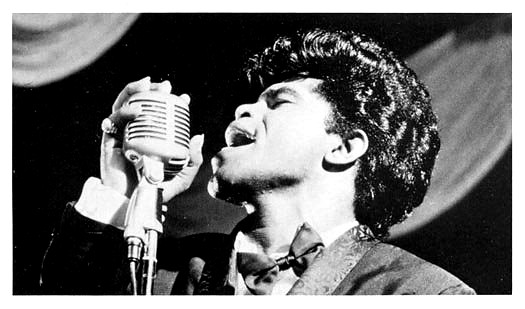
Honoring the Godfather of Soul

James Brown, 73, passed away on Christmas Day. Let's take a moment to honor his passing...and then LET'S GET DOWN!
I think that's how he would have wanted it.

Monday, November 27, 2006

Writing from the final stretch of the semester...
So since I haven't been blogging regularly, I decided that I would show all of you what I have been doing...academic work.
Good times, ya'll. But seriously, here are some book reviews that I have written in the last month or so. One about youth culture in Iran, the other on processes of genocide and sexual violence on Native communities. Check them out and let me know what you think...
peace,
c

Andrea Smith, Conquest: Sexual Violence and American Indian Genocide, Cambridge: South End Press, 2005, 244 pg.

In this powerful work, Cherokee scholar and activist Andrea Smith provides a complex, richly layered analysis of the intertwined processes of sexual violence and genocidal state practices on Native communities. Drawing from her experiences as an activist within Native political struggles, Smith explores ongoing genocidal practices against and within Native communities using an intersectional analysis that demonstrates the ways in which gender, sexual, and racial violence are deeply imbricated in one another. Smith argues that it is critical to understand that “gender violence is not simply a tool of patriarchal control, but also serves as a tool of racism and colonialism. That is, colonial relationships are themselves gendered and sexualized (1).” Smith uses the trope of sexual violence not merely as a metaphor for the colonial and contemporary genocide of Native peoples but as the modality through which these processes take place. She explores how discourses of Native bodies, particularly those of Native women, dehumanize them by representing them as dirty, polluting, violent, inherently rapable, and ultimately as expendable. While sexual violence may be readily apparent in the history of rape and forced sterilization of Native women, Smith reveals the multiple ways in which sexual violence plays a role in the ongoing genocide of Native peoples. By exploring the patterns of medical testing without informed consent, internment at boarding schools, environmental degradation of Native lands and the persistent usurpation of Native lands and the dismissal of the sovereignty of Native communities, Smith challenges us to rethink our understanding of the criminalization and erasure of Native peoples.

Smith skillfully outlines the violence that Native communities confront. However, the most innovative aspect of this work is found in the ways that she squarely locates political activism in her analytical work, particularly in Chapter 7 “Anticolonial Responses to Gender Violence.” The central question in her analysis of gendered violence is not how to create more effective models (i.e. “culturally relevant,” preventive, etc) for treating sexual or domestic violence but rather, “What would it take to end violence against women of color (153)?” To that end, Smith presents various models culled from her experiences as a political organizer for how we might combat genocidal practices of sexual violence. She offers examples of activism and community justice by referencing the work of numerous organizations across the country such as the Brooklyn-based group, Sista II Sista/ Hermana a Hermana, that works with young women of color; Communities Against Race and Abuse (CARA), which organizes against police abuse and promotes the abolition of the prison industrial complex; and Friends Are Reaching Out (FAR Out), a Seattle organization that which works with queer and LGBT communities of color. Many of these organizations are committed to working with those communities that are marginalized by the mainstream antiviolence movement: queer people, sex workers, women of color, young women, incarcerated women and men, and immigrants. By providing these models, Smith demonstrates how activists and scholars alike might work to adopt antiviolence strategies that are mindful of the larger structures of violence that shape the world in which we live (151).” In other words, fighting against violence solely from a gender perspective is not enough if it doesn’t speak to the entire complex of oppressions that engender sexual violence.

Conquest is a stunning example of the possibilities that emerge from socially engaged and theoretically rigorous scholarship. It is clear that Smith, who is an active member of Incite! Women of Color Against Violence, has produced a work that is steeped in radical tradition of U.S. women of color feminisms. It is hardly surprising that Conquest mirrors similar work on the antiviolence movement and the intersections of race and gender in the prison industrial complex being done by Incite! activists and scholars such as Beth Ritchie and Julia Sudbury. Smith’s commitment to utilizing women of color feminist practice and theory is reflected in her ability to describe the particularity of Native women’s experiences of racial, gender, and sexual injustice and place it in dialogue with the experiences of other women of color, particularly Latinas and women of African descent. In other words, while Smith is clear about the particularity of Native women’s experiences of sexualized genocidal violence she locates it within a larger framework of what bell hooks refers to as “white supremacist capitalist patriarchy” that diminishes the lives of non-white communities, and non-white women in particular, across the globe. As her work demonstrates, the survival of communities of color depends on how well we can incorporate these insights into our activist work. Conquest as both critique and activist model, presents a vision of how we might struggle for holistic, intersectional justice in our communities.


Roxanne Varzi. Warring Souls: Youth, Media and Martyrdom in Post-Revolution Iran. Durham and London: Duke University Press, 2006, 290p.

In this innovative ethnography, Roxanne Varzi explores the themes of nation-building, citizenship formation, and subjectivity in the lives of the generation of young men and women who have come of age in the period following Iran’s 1979 Islamic Revolution. Immediately after the revolution, Iran became embroiled in a war with Iraq (1980-1988) that was used by the Islamic government as a means of consolidating support for the revolution and initiating a project of crafting the national identity to reflect the emergence of the ideal Islamic citizen/subject. Varzi outlines the ways in which education, as well as popular culture and the media, become critical means of fulfilling this mandate, which is fraught with contradiction. She specifically focuses on the effects of this project on Iranian youth whose sense of self is fundamentally characterized by the incongruent relationship between their internal moral values and those imposed on them by the state. Varzi is particularly interested in determining the extent to which (enforced) public practice of Islam results in genuine belief. Describing the conflict that youth confront in their daily lives she questions the extent to which state-produced Islamic reality, permeates and/or constructs an individual’s inner reality and faith. Warring Souls is an analytically sophisticated work that prompts us to think more critically about the way in which state practices are lived in the bodies of its citizens, particularly the ways that the Islamic Republic of Iran regulates the appearance, autonomy, and experiences of its citizens.

State practices to consolidate a national Islamic identity are exemplified in the use of education to socialize Iranian youth. Varzi describes the insertion of Islam into quotidian daily practice and the ways in which young people navigate the contradictions between the Islamic public sphere and the less than ideal Islamic realities of their families and private lives. She observes, “The government propagates Islamic ideology in every possible daily ritual and rule – for example, in elementary school physical education where students are instructed to shout out numbers followed by ‘Allah’ after each move: a side bend, ‘one Allah,’ touch toes, ‘two Allah (138).’” At school, children are shown empty alcohol bottles and asked if they have ever seen them before in their homes; although they may know that alcohol consumption is a criminalized activity, they will not report parents who may be engaging in such behaviors and actually contradicting the validity of such policies (141). From an early age, children learn the value of dissemblance, that is the ability to publicly perform an Islamic identity while also flouting the expectations of the state in their private lives (142). There are however, tangible consequences for those who occupy this space of perpetual dissemblance.

Conducting research with university students living in Tehran as well as her own family from 1991-2000, Varzi attempted to make sense of the ways in which young people develop a sense of self that conforms to societal expectations while simultaneously maintaining a personal sense of integrity. She argues in her work that the project of producing ideal Islamic citizens has led to a split within Iranian youth between baten, the inner-self, “individual senses of reality” and the zaher, the outer-self that performs citizenship (7). Despite the state’s attempts to propagate a highly moralistic Islamic identity to the post-Revolution generation, Varzi suggests that the results of this project have not resulted in the creation of the ideal Islamic citizen, but rather has “further secularized Iranian youth and precipitated a crisis in identity between baten/zaher (173).” Despite the government’s critique of the moral decadence of the West, Iranian youth are increasingly afflicted with rising rates of HIV/AIDS infection, drug use/abuse, suicide/depression, etc (173). The inner/outer split and the inability of many Iranian youth to reconcile the divergent aspects of identity have led to an increased tension between what Varzi refers to as “bi-khodi,” the process of self-annihilation, and “khod-shenasi,” the process of self-construction or self-help (7). If the demands of citizenship require the annihilation of the self in order to maintain the nation, what are the means by which Iranian youth can sustain their will to construct their own self-identities?

Despite the encroachments of the state, Iranian youth have proven to be adept in developing alternate realities for themselves in the midst of an intense Islamification process – this is particularly evident in the ways that youth transform public and religious spaces and even their own bodies into sites of self-fulfillment – young women who wrap themselves modestly in chadors while discreetly applying makeup or young men who decrease the threat of being stopped by the komiteh by “adorning their cars with quotations from the Quran. Throughout Warring Souls, Varzi demonstrates the ways in which “people occupy the same strict ideological space and yet live in completely different realities (12).” That is, how people challenge imposed social scripts and create alternative ways of being and doing that speak to their inner-selves. She notes that, “In the end, we are not only mediators of our own worlds where we see what we want to see, but we also create that world as it creates us in a simultaneous act of revealing and concealing (5).” Her personal stake in this ethnography is reflected in the creative and imaginative ways in which she represents the experiences of Iranian youth. Varzi draws from the rich cultural traditions of Islamic mysticism, particularly Sufism, and Persian folklore in her reading of contemporary dilemmas within Iran. Warring Souls is a polyrhythmic text that weaves academic analysis, journal entries, personal reflections, and ethnographic field notes to create a lens through which readers can enter the multiple realities of youth living in the Islamic Republic of Iran.

Given popular discourses of Islamic fundamentalism in the Middle East, Warring Souls provides an analytically rich ethnographic counternarrative that explores the Islamic Revolution and its discontents while skillfully avoiding pathologizing Iranians or Iranian culture. In this work, Islam is not the culprit, since as Varzi points out many Iranians were self-identified Muslims prior to the revolution, rather it is the way in which state practices aimed at producing Islamic citizens has resulted in a problematic inner/outer spilt in the identity formation of Iranian youth. This book is useful tool for helping us to evaluate the role of the state in the development of identity and the need for locating this process within larger processes of socialization and nation-building.

Wednesday, November 01, 2006


What Was So Great About Apartheid Anyway?

PW Botha, the man who upheld and defended state-sanctioned white supremacy (also known as apartheid) in South Africa at the height of the anti-apartheid rebellion, has passed away. While I never celebrate death, even of white supremacist clowns, I certainly have a difficult time finding anything positive to say to commemorate this man's passing. While in office, he allowed the slaughter of thousands of Black South Africans protesting apartheid; rigidly upheld the apartheid laws which separated South Africa's population into Afrikaaner, Black, and Colored; and, despite international pressure, refused to release Nelson Mandela from prison (Mandela spent 27 years in prison for his work with the ANC).
So you can imagine my surprise when newspapers from around the world are citing Mandela honoring Botha.
According to Al Jazeera, Mandela said in a statement on Wednesday:
"While to many Mr. Botha will remain a symbol of apartheid, we also remember him for the steps he took to pave the way towards the eventual peacefully negotiated settlement of our country."
Does it matter that he took those steps kicking and screaming? So much so that he was overthrown by his own party and it was his successor, FW de Klerk who transitioned the country into post-apartheid?
Mandela continued stating that Botha's death should be a reminder of "how South Africans from all persuasions ultimately came together to save our country from self-destruction."
I understand respecting the dead. But it seems to me that if the positions you took in life didn't make you a hero then dying shouldn't make you one by default.
It is unclear to me whether Mandela, the consummate diplomat, is simply trying to embody in his actions the principles of reconciliation that the post-apartheid government has attempted to use. Or does he simply not want to ruffle feathers by pointing out the obvious: Botha was at the bottom of it all a terrible human being who died believing in the fundamental superiority of the white race. Don't believe me? Following the end of apartheid, Botha refused to participate in the Truth and Reconciliation Commissions to address the crimes against humanity committed by the Afrikaaner-led South African state in its brutal repression of the anti-apartheid movement. He was quoted as stating:
"Take me to court if you want to charge me! I will not appear in circuses!"
And he never apologized or recanted his views on apartheid.
Ever.
And the son-of-a-bitch lived to be 90 years old.
I guess what the old folks say is true.
Some folks really are just too evil to die.
Nelson Mandela, as much as I admire him, in this instance, does not speak for me. I can't say that I am grieved by Botha's passing. If hell exists, I am sure that there is a special spot reserved just for him. And if there is any justice in this universe he'll be forced to wait on non-white folks for the rest of eternity...alright, maybe I went a little too far.
But out of respect for the thousands of South African men and women who were unlawfully detained, tortured, incarcerated, maimed, violated, and murdered under his tenure as the head of state, I will not celebrate a man in death that I despised while he lived.

To read the complete article check out: http://english.aljazeera.net/NR/exeres/E84E6ACE-5404-4E19-BD2B-3023E204262E.htm.

Monday, October 30, 2006


Not sure what to say...


I have been following the news of the violence taking place in Oaxaca, Mexico. Perhaps not as closely as I should still as a place where I once protested and slept under the arches of the Governor's Palace with dozens of angry campesinos denouncing unfair detentions, it is a place that is near to my heart.
That is why the recent violence has left me unsure of what to say about the situation. According to Mexico Week in Review, the federal goverment has deployed military forces into the area to combat the violence, but this "help" comes weeks, months, even after the original attacks begun. MWR states, "The pretext for the deployment of federal police to Oaxaca was an outbreak of violence on Oct. 27 in which at least three people were killed and more than 23 wounded; one of the wounded died that night, according to some reports. In the morning of Oct. 27 APPO supporters stepped up their protests by blocking Oaxaca city's access to the highway to Mexico City and the road to the Isthmus of Tehuantepec. By 10am state police backed by PRI supporters had started violent attacks on protesters. A gang of hooded men tried to attack Radio Universidad, a pro-strike radio station at the local university, while there was shooting on the El Rosario bridge. Five simultaneous attacks on APPO barricades started at about 5 pm. In Santa Lucia del Camino, a municipality a few miles outside Oaxaca city, people began firing on the barricade from inside a house. APPO supporters backed a truck into the house to break down the door, but a group of men, many in red shirts, began firing on them. Oswaldo Ramirez, a photographer for the Mexico City daily Milenio, was grazed on the knee by a bullet while he was covering the incident; the armed men also fired on Raul Estrella, a photographer from the Mexico City daily El Universal but missed him. Brad Will, a freelance journalist and photographer who worked with the Indymedia Center in New York City, was hit twice in the abdomen as he videotaped the shooting. Strikers rushed him to a Red Cross hospital but was pronounced dead on arrival."
It is at the end where I pause, an American journalist killed?
I, like most of the people I know, live in the cyberworld. Knowing he will be interested and appalled I send this information to my partner who is out of the country. He replies at 2am Monday morning. Not only did he know this man from various political collaborations and activist circles in NYC, but I knew this young man.
And then it comes back to me, the baseball cap pushed down over red, unkempt hair. Skinny, tall, laughing over a plate of vegan friendly thai food...and I sit at my desk and cry.
I don't mean to suggest that the life of this man, by virtue of being a citizen of the most powerful country in the world, is more valuable than the many Mexican women and men who have lost their lives or live under the constant threat of death and violence.
All I am saying is that the violence is now at my front door. In my bedroom.
The question is what am I going to do about it?

Thursday, October 19, 2006


Why I Love Bob Jensen (he's the one on the left!)

Life at the University of Texas can be hard for students of color. As if attending a predominantly white university with an irrefutably racist past wasn't enough-- until the 1950s all of the major buildings on campus were built facing south and statues honoring Confederate heroes grace the main mall-- it can be overwhelming dealing with students and faculty alike who refuse to actively confront racism at this University.
One ne
ed only look to the law school to prove my point.
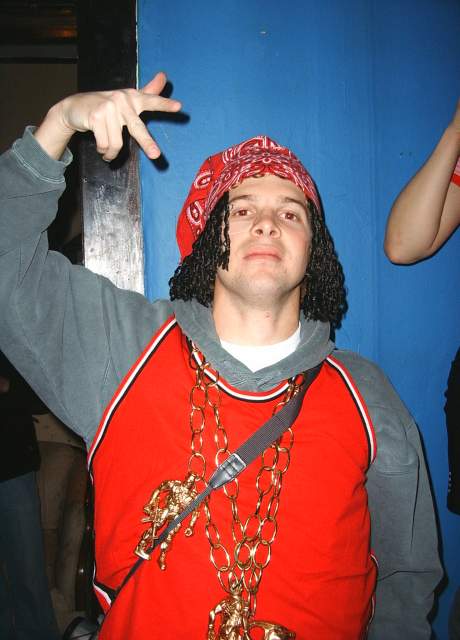
About a week ago, about 20 first-year law students threw a "ghetto fabulous party" in which participants dressed i
n outfits stereotypically associated with poor, working-class Black and Latinos and flaunted what they considered to be ghetto names such as Jose and LaTonya. Some wore gaudy "bling" jewelry while others thought it'd be cute to don gold grills for the evening.
While this is clearly problematic, the truly disturbing part of this whole story is the response of the law school to the event. The dean of the law school responded by reprimanding the students for being "insensitive" and warned that these thoughtless actions might have negative repercussions for their future careers.
Their careers? What about the fact that this party was racist?
This is where my love for Bob Jensen comes in.
In an editorial in the Daily Texan, Jensen made a point to call the party out for what it was. A demonstration of the reality of white supremacy at this institution. Rather than engage in discussions of cultural sensitivity, which seem to dominate any discourse of diversity in institutions of higher education, Jensen redirected the focus to thinking critically about the institutional and personal practices that reinscribe white supremacy as a normal part of American life.
His article is worth quoting at length as he discusses the real problems with this "ghetto" party:

"But whatever the case, should we be stressing to students that the reason they should not be white supremacists is that it might hurt their careers? What does such a message convey to sudents and to the community?

What’s missing in this official response is a clear statement that these law students -- many of whom go on to join the ranks of the powerful who run society -- have engaged in behavior that is overtly racist. Whatever their motivations in planning or attending the party, they have demonstrated that they have internalized a white-supremacist ideology. When these students are making future decisions in business, government, and education, how will such white supremacy manifest itself? And who will be hurt by that?

Here’s what we should say to students: The problem with a racist “ghetto fabulous” party isn’t that it offends some people or tarnishes the image of UT or may hurt careers. The problem is that it’s racist, and when you engage in such behavior you are deepening the racism of a white-supremacist culture, and that’s wrong. It violates the moral and political principles that we all say we endorse. It supports and strengthens an unjust social system that hurts people."

You can check out the rest of his editorial at http://www.zmag.org/content/showarticle.cfm?SectionID=30&ItemID=11203

So this is my tribute to one of the few white men on campus who truly keeps it real, with himself and his community. If Bob Jensen is a fountain of undiluted foolishness (as he was once called by former University President Larry Faulkner) may we all be so lucky to be labeled as such and continue to take an unequivocal stand in the fight for racial justice.

(for the record, the photos I am using do not come from the Law School students' party. I did a google image search and found these. I felt that they illustrated the problematic racial politics of these events. As many of you know, these ghetto parties have been happening all over the country at a number of universities in the last 3-5 years.)

Black Panther Party Turns 40

Hello All:
Just got this link. Here are a number of interviews with members of the Black Panther Party who gathered in Oakland, CA this past weekend to commemorate 40 years of racial justice organizing, black self-determination, and fighting to dismantle white supremacy. It is a reassuring reminder to me that the struggle for justice is a lifelong commitment and the women and men who formed the Black Panther Party are an exemplary model of exactly how we might all do that.
You can check out the interviews yourself at:

http://odeo.com/audio/2180391/view pt 1

http://odeo.com/audio/2180907/view pt 2

http://odeo.com/audio/2181833/view pt 3

Peace and Blessings to you all...

Monday, October 16, 2006

Wow...have I really not posted in 2 months?
Shit.
Well, I am back now. Sort of and trying to regain my bearings. It's the second year of graduate school ya'll and guess who's getting a Masters' degree in May 2007?
Don't sleep, you knew it was coming. So I've been a bit swamped. This fall has been completely insane. I'm a teaching assistant (TA) at UT so that's been a bit of a rude awakening. Having to come to campus twice a week on days I don't have class is a bit of a drag and keeps me from playing around and procrastinating the way I used to...sigh, I miss the good ol' days of full funding from the University.
In any case, just a note to let you know that I will be blogging again because I have a brand new WanderLust adventure to share with you: Courtney Does Scotland.
That's right Scotland. You thought the fact that there are no Black people in Scotland (except for one of my all-time favorite homegirls) was gonna stop me from blowing it up? Naw man, I went and you know Loch Ness was at the top of my list. Sadly, I didn't see Nessie, but that doesn't matter because Scotland was truly amazing and beautiful and tranquil and wonderful.
So stay tuned, a full on post is on the way.
Peace...

by the way: check out my homegirl's blog, Adventures in Negroshire. If you have any sense of humor at all and can appreciate somebody taking on chance on love and happiness you'll love this.